One of the most common questions homeowners ask after discovering roofing damage is whether the roof should be repaired or completely replaced. In some situations, a targeted repair may successfully restore the roof and prevent further problems. In other cases, ongoing deterioration, aging materials, or widespread damage may make full replacement the more practical long-term investment.
The answer often depends on the condition of the existing roof, the severity of the damage, the age of the roofing system, and how long the homeowner plans to remain in the property. While roof repairs may initially seem less expensive, repeated patchwork on an aging roof can eventually lead to larger costs and recurring problems over time.
Lico’s Roofing Company provides residential roofing inspections, repairs, maintenance, and roof replacement services throughout the Bay Area, helping homeowners make informed decisions based on the actual condition of their roofing systems rather than unnecessary upselling or temporary fixes.
TL;DR: Roof Repair vs Roof Replacement
- Minor or isolated roofing damage may often be repaired successfully
- Older roofs with widespread deterioration may benefit more from replacement
- Repeated repairs on aging roofs can eventually become more expensive long term
- Professional inspections help determine the true condition of the roofing system
- Roof replacement may improve energy efficiency, durability, and property value
- The right solution depends on roof age, damage severity, long-term reliability, and overall roofing system condition.
When Is Roof Repair the Better Option?
Issues such as damaged flashing, a small leak, missing shingles, or localized storm damage can sometimes be repaired without requiring full roof replacement. When addressed early, repairs may help restore waterproofing protection while extending the life of the existing roof.
Professional inspections help determine whether the surrounding roofing materials are still structurally sound or if additional hidden damage may already be developing beneath the surface.
What Roofing Problems Can Usually Be Repaired?
- isolated leaks
- missing shingles or tiles
- flashing damage
- minor storm damage
- small areas of wind-related wear
When Does Roof Replacement Make More Sense?
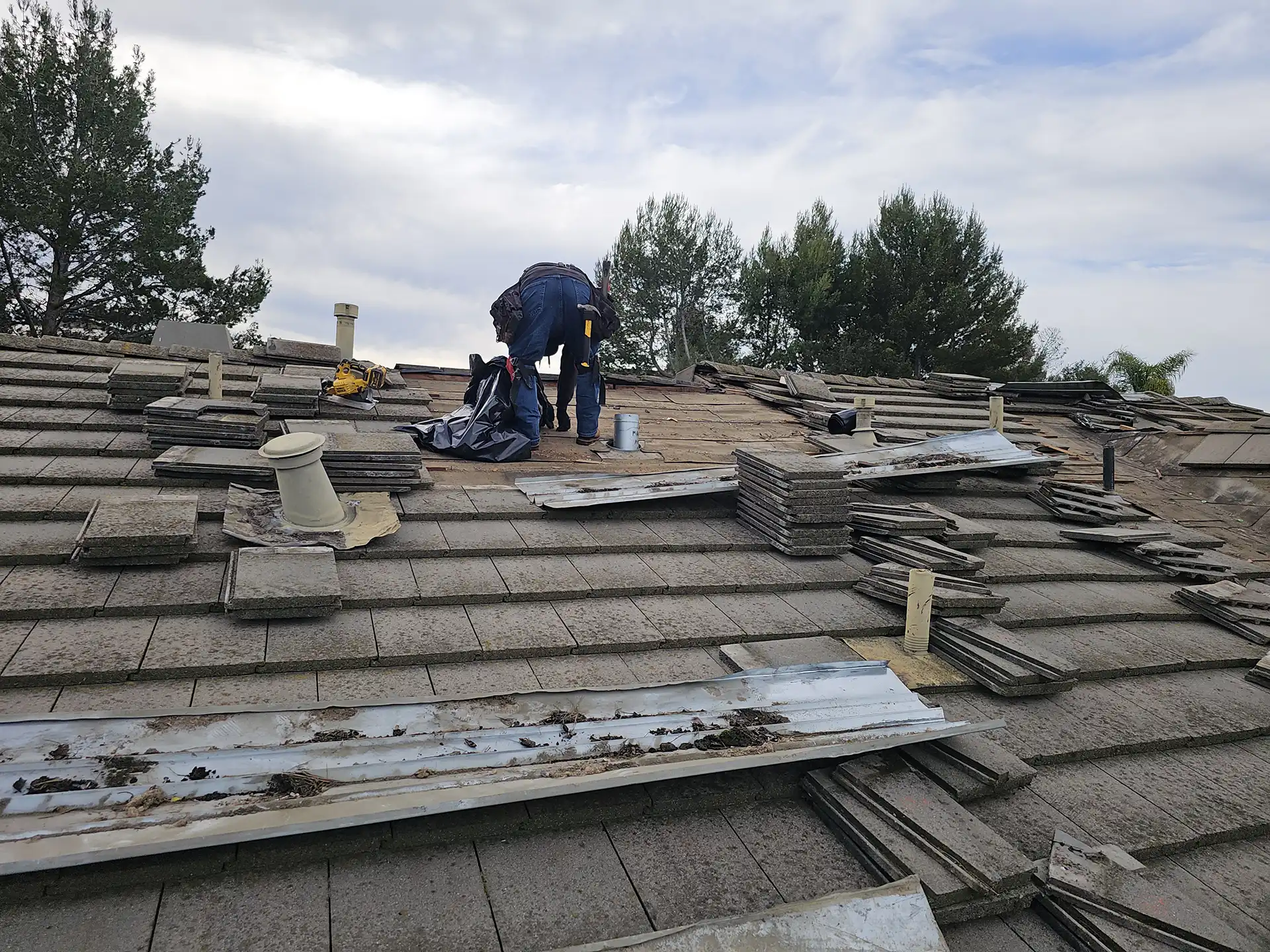
Older roofs may begin experiencing widespread wear including cracked shingles, deteriorating underlayment, recurring leaks, weakened flashing, sagging areas, or structural moisture damage. In these situations, repeated repairs may only provide temporary improvements while larger roofing failures continue developing underneath. Homeowners may also consider replacement when:
- repairs become increasingly frequent
- storm damage affects large sections of the roof
- energy efficiency declines
- roofing materials become brittle or deteriorated
- leaks continue returning after previous repairs
- A new roofing system often provides improved durability, ventilation, weather protection, and long-term reliability.
How Does Roof Age Affect the Decision?
As roofing materials age, they gradually lose flexibility, waterproofing performance, and resistance to weather exposure. California sun, heat, UV exposure, and seasonal weather changes all contribute to long-term roof deterioration throughout the Bay Area.
If a roof is already approaching the end of its lifespan, replacement may help homeowners avoid repeated repair costs and ongoing maintenance concerns over the coming years.
Can Roof Repairs Become More Expensive Over Time?
Repeated temporary repairs on an aging roof may also add up quickly without fully resolving the underlying problem.
In some situations, homeowners spend years paying for recurring repairs before ultimately replacing the roof anyway. Professional inspections help determine whether continued repairs are likely to remain cost-effective or if replacement would provide better long-term protection.
How Does Roof Replacement Improve Home Value?
Potential buyers often view older roofs as a major future expense, while newer roofing systems may provide greater confidence during home sales and inspections.
Modern roofing materials and installation methods are also designed to provide stronger long-term durability while helping homes perform more efficiently throughout changing weather conditions.
Why Do Professional Roof Inspections Matter?
- overall roof condition
- hidden moisture intrusion
- flashing performance
- ventilation concerns
- storm damage
- remaining roof lifespan
- Accurate inspections help homeowners make informed decisions based on the actual condition of the roofing system rather than guessing whether repairs or replacement are truly necessary.
Why Does Choosing the Right Roofing Contractor Matter?
Whether a roof needs repairs or complete replacement, proper workmanship plays a major role in long-term roofing performance. Installation quality, flashing details, ventilation design, and material selection all directly affect roof lifespan and overall durability.
Lico’s Roofing Company provides residential roofing inspections, roof repairs, maintenance services, leak detection, and roof replacement solutions designed to deliver dependable protection and long-lasting performance for homeowners throughout the Bay Area.
Every project is completed with attention to detail, durable materials, and a focus on protecting the long-term value of the home. Contact us today to get started.

